
Valley of Flowers and Hemkund Sahib: planning around a short season
By Ashutosh
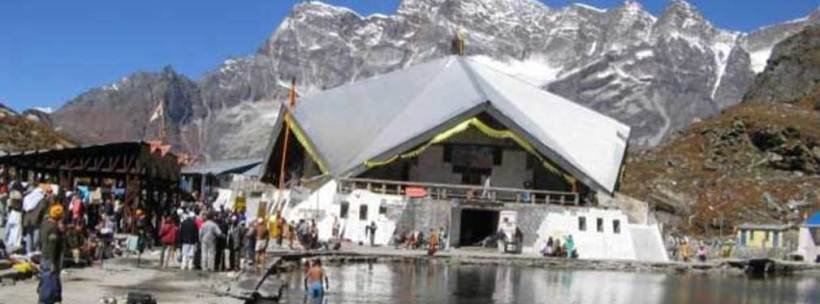
Both sit above Govindghat, both open for a matter of weeks, and the helicopter only solves part of the journey. Timing is everything here.
These two are usually booked together, because they share a road head, a season and a valley. They reward careful timing more than almost anything else in Uttarakhand — and they are the trip where people most often misunderstand what a helicopter does for them.
Two destinations, one approach
Both the Valley of Flowers National Park and Hemkund Sahib are reached from Govindghat, above Joshimath. From there the route runs up to Ghangaria, the small settlement that serves as base for both. The valley lies one way from Ghangaria; the gurudwara lies the other, and considerably higher.
The helicopter leg most people book covers Govindghat to Ghangaria, about 14 km in around eight minutes,. It replaces a long uphill trek and it is genuinely transformative for anyone short on days or fitness. What it does not do is deliver you to either destination. From Ghangaria, both are walks — and the walk to Hemkund Sahib, at roughly 4,632 metres, is a serious one.
The bloom is the whole point, and it is brief
The Valley of Flowers is a UNESCO World Heritage Site, and the thing it is famous for happens on a short schedule. The park opens around the start of June and closes in early October, but the flowering is concentrated in the monsoon weeks — broadly mid-July through August. Arrive in June and you will walk a beautiful green valley with very little in bloom. Arrive in late September and you will have missed it.
The catch is unavoidable: peak bloom is peak monsoon. The same rain that makes the display makes the flying unreliable and the paths slick. There is no week that is both reliably clear and reliably flowering, and anyone selling you one is guessing.
Hemkund Sahib runs on its own calendar
The gurudwara typically opens around late May and closes in early October, with snow at either end deciding the exact dates. It is high enough that altitude matters for everyone, regardless of fitness, and the final stretch is steep. Give yourself a night at Ghangaria before attempting it rather than trying to fly in and go straight up.
What to expect from the flying
The Govindghat sector is a short shuttle, operated on the same weather-led rhythm as the rest of the Garhwal: early is best, afternoons are unreliable, and monsoon weeks can close the sector for a day at a time. Baggage allowances are small. Build slack into your plans in both directions — being weathered in at Ghangaria is a normal occurrence, not a disaster, provided you have not booked an onward flight for that evening.
Planning it sensibly
- For the flowers: target late July to mid-August and accept the weather risk as the price of the bloom.
- For Hemkund Sahib with better odds: early September, once the heaviest rain has eased.
- For both: allow at least one full spare day. One is the minimum; two is comfortable.
- Regardless: proper footwear and real rain gear. This is a walking trip with a helicopter leg, not a flying trip.
Tell us which of the two matters more to you and we will suggest the window that favours it — get in touch with your dates.
Common questions
Does the helicopter fly to the Valley of Flowers or to Hemkund Sahib? No. The helicopter flies Govindghat to Ghangaria, about 14 km in around eight minutes. From Ghangaria both the valley and the gurudwara are reached on foot.
How do I get a Govindghat to Ghangaria helicopter seat? Seats are sold on IRCTC HeliYatra after yatra registration. For BookHelicopter package customers we can also arrange an operator seat, subject to availability.
When are the flowers in bloom? The park opens around the start of June and closes in early October, but the flowering is concentrated broadly from mid-July through August. In June there is little in bloom and by late September it is over.
When does Hemkund Sahib open? The gurudwara typically opens around late May and closes in early October; snow at either end decides the exact dates each year.
What is the best time to visit both? For the flowers, late July to mid-August, accepting the monsoon weather risk. For Hemkund Sahib with better weather odds, early September once the heaviest rain has eased.
How many spare days should I keep? At least one full spare day; two is comfortable. Spend a night at Ghangaria before climbing to Hemkund Sahib at about 4,632 metres, and do not book an onward flight for the evening you plan to fly down.