
Kailash Mansarovar by helicopter: how the Nepal route works
By Ashutosh
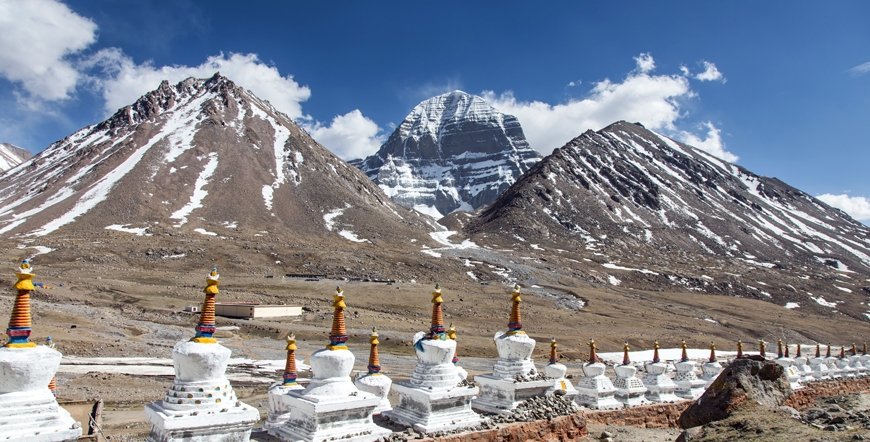
The helicopter shortens the hardest approach in Himalayan pilgrimage — but Kailash is in Tibet, and the permits matter as much as the flying.
Of everything arranged by helicopter in this part of the world, Kailash Mansarovar is the most demanding and the least forgiving of a casual plan. The aircraft removes days of punishing road travel. It does not remove the altitude, the border, or the parikrama.
Where is Kailash, and why does that matter?
Mount Kailash and Lake Mansarovar are in Tibet, within China — not in India or Nepal. Everything about the trip follows from that: you are crossing an international border, you need Chinese permits arranged in advance through an authorised operator, and the itinerary is only as reliable as the border's willingness to open on schedule.
What is the helicopter actually used for?
On the Nepal route the sequence runs Kathmandu → Nepalgunj → Simikot → Hilsa, with the Simikot–Hilsa leg flown by helicopter over terrain that is otherwise several hard days. From Hilsa you cross into Tibet and continue overland to Mansarovar and Darchen. The helicopter is one leg of a longer journey, not the journey.
How high does it get?
Lake Mansarovar sits at roughly 4,590 metres. The parikrama around Kailash crosses Dolma La at about 5,630 metres — high enough that acclimatisation is not optional and altitude sickness is a real risk rather than a caution in a brochure. Itineraries build in acclimatisation days on purpose. Any plan that skips them is selling you something dangerous.
Do you have to do the parikrama on foot?
The circuit is traditionally walked over about three days. Ponies and porters are commonly arranged, and many pilgrims use them for part of it. Some do a shortened version. Decide honestly before you go rather than at 5,000 metres, and be clear with your operator about what you intend so the support is arranged.
What is the route's weakest link?
The Simikot–Hilsa helicopter sector. It is mountain flying into a remote strip, and it is weather-dependent in both directions. Groups do get held at Simikot or on the Tibet side for a day or more. Spare days are not a luxury on this trip — a fixed onward international flight the day after your scheduled return is a bad bet.
Who should not attempt it?
Anyone with a significant cardiac or respiratory condition, and anyone unwilling to take acclimatisation seriously. This is the one pilgrimage where the honest advice is sometimes no.
Our Kailash Mansarovar yatra by helicopter page lists the ways to go: the 6-night package from Kathmandu on the route above, the 9-day helicopter tour via Lucknow, which joins it at Nepalgunj, and the yatra by road via Kodari for those who would rather not fly. Talk to us about dates — permits make this one a trip to plan months ahead.
Common questions
Where are Mount Kailash and Lake Mansarovar? In Tibet, within China, not in India or Nepal. You cross an international border and need Chinese permits arranged in advance through an authorised operator.
Which part of the Nepal route is flown by helicopter? The route runs Kathmandu, Nepalgunj, Simikot and Hilsa, and the Simikot to Hilsa leg is flown by helicopter. From Hilsa you cross into Tibet and continue overland to Mansarovar and Darchen.
How high does the Kailash Mansarovar yatra go? Lake Mansarovar is at roughly 4,590 metres and the parikrama crosses Dolma La at about 5,630 metres, so itineraries build in acclimatisation days that should never be skipped.
Do I have to walk the whole parikrama? It is traditionally walked over about three days. Ponies and porters are commonly arranged and some pilgrims do a shortened version; tell your operator before you go so the support is arranged.
Can the helicopter leg be delayed? Yes. The Simikot to Hilsa flight depends on the weather in both directions and groups are sometimes held for a day or more, so keep spare days and do not book an onward international flight for the day after your planned return.
Who should not attempt Kailash Mansarovar? Anyone with a significant cardiac or respiratory condition, and anyone unwilling to take acclimatisation seriously.